
MEET PHOTOGRAPHER SUZANNE PHOENIX
For more than a decade, Suzanne Phoenix has been quietly, insistently building an archive of people as they choose to be seen. A queer Naarm-based photographer, artist and self-publisher, Phoenix’s long-running International Women’s Day portrait series began with a moment of curiosity in 2012 and has since grown into a powerful living record of gender, equity and solidarity. Now, marking 15 years of the project and its 200th portrait, we spoke with Suzanne about participant-led portraiture, the evolution of feminism, and why preserving voices matters.
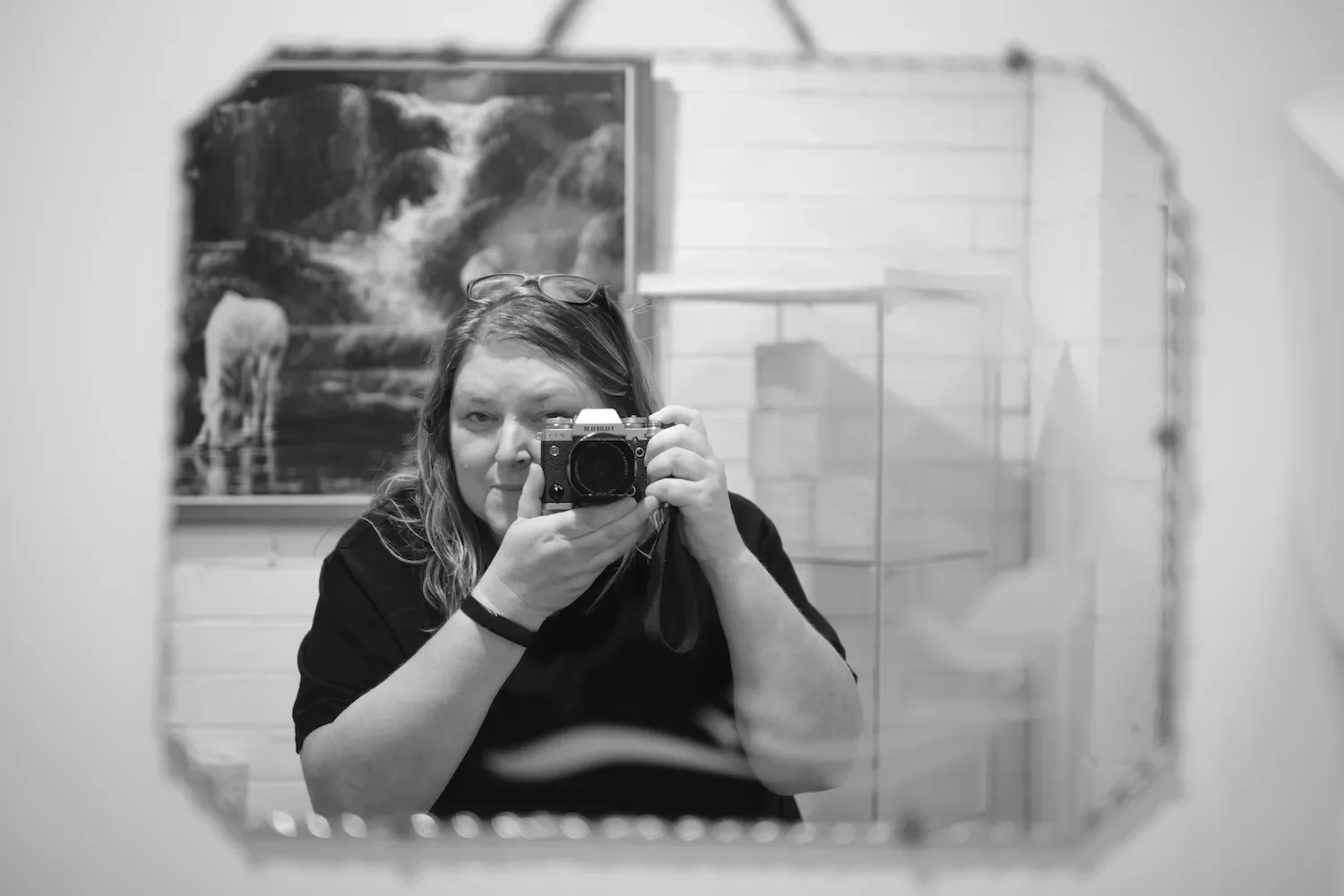
Suzanne Phoenix
You’ve been creating photographic portraits for over 15 years now. Can you tell us about how this long-term project began, and what continues to draw you back to portraiture as a form?
On 8 March 2012, I arrived at work at a Neighbourhood House and was met with a joyful scene - women dressed up, marking International Women’s Day in their own ways. I was struck by the pride and intention in how they presented themselves, and I asked if I could photograph them and hear what IWD meant to them. That simple curiosity became the first chapter of what is now a 15-year project. What began as a spontaneous response has evolved into a long-term commitment to documenting how people understand gender, equity, and solidarity. Each year builds on the last, creating a living archive that reflects social shifts as much as individual stories. Portraiture continues to draw me back because it is endlessly revealing. A portrait captures not just how someone looks, but how they choose to be seen. For this series, each image is created specifically for the project, inviting reflection, agency, and sometimes defiance. Portraiture becomes more than representation - it becomes a moment of self-definition, and that is something I never tire of witnessing.
The IWD2026 exhibition centres cis and trans women and gender diverse people responding to what International Women’s Day means to them. Why was it important for you that this project be participant-led in both image and written response?
It was essential to me that cis and trans women and gender diverse people are first and up front in this series. From the beginning, I’ve approached each portrait as a collaboration, but one where the participant leads. I don’t direct how someone dresses, poses, or presents themselves. The power of the image comes from allowing people to decide how they wish to be seen. That act of self-determination is especially significant within the context of International Women’s Day. The written responses are just as important as the photographs. A portrait can hold presence and emotion, but the written word carries voice - unfiltered, self-defined, and anchored in a specific moment in time. Inviting participants to articulate what International Women’s Day means to them ensures the exhibition isn’t a singular curatorial statement; it becomes a chorus of lived experiences, perspectives, and politics. There’s also something powerful about permanence. These texts and images will sit in public collections and libraries, held for generations. To have raw, nuanced, personally authored reflections by cis and trans women and gender diverse people formally archived matters deeply. It resists simplification. It preserves complexity. And it ensures that when future audiences look back, they encounter not just representations, but voices speaking for themselves.
Across the 200 portraits created over the years, what shifts or changes have you noticed in how people understand and speak about feminism and gender equity?
As the series reaches 200 portraits in 2026, one of the most significant shifts I’ve witnessed is an expanding understanding of who feminism is for. When I began, conversations around feminism and gender equity were often framed in narrower terms. Over time, there’s been a profound and necessary broadening. I’ve seen a growing willingness to centre trans women and gender diverse people not as an afterthought, but as integral to the movement. That inclusion has reshaped the language people use, the stories they tell, and the accountability they hold themselves to. There’s also been a deeper awareness of intersectionality. People are speaking more openly about how gender intersects with race, class, disability, queerness, and culture. The conversation has become less about representation as a symbolic gesture and more about structural change - about safety, access, labour, leadership, and who gets to define the narrative. Through these 200 portraits, I’ve watched feminism evolve from something some people felt adjacent to, into something more collective, more complex, and more self- reflective. The most heartening change has been the recognition that gender equity is not a finite goal for a single group - it’s an ongoing, shared responsibility that must hold space for the full spectrum of gendered experience.
This year’s exhibition features 23 people from Naarm across activism, music, art, and community work. What guided your selection for the 2026 cohort, and what connects them as a collective?
There are a number of processes at work to reach out and create a new annual series. When I witness a person that I find unique, inspirational, someone who rocks my world, I add them to the list. There are some people I invite every year but the portrait hasn’t happened yet, but I hope it will one day. I usually go back to them as the first on the invite list. Then I look at everyone and try (I say try) to curate a group of people who offer diversity of views and interests. I often have to take a deep breath and just send the invite because if you never ask, you never know. For the 2026 group, the guiding principle was impact over profile. I was interested in people who have actively shaped Naarm’s cultural and political landscape - not just through their art or music, but through the communities they build, the risks they take, and the spaces they create for others. Across activism, music, visual art, and community work, each of these 23 individuals has contributed to a living ecosystem rather than simply a scene. There’s a strong thread of DIY ethics and cross-disciplinary practice running through the group. Artists like Ponch Hawkes and Carol Green sit alongside a new generation of visual storytellers such as Alex Zucco; musicians span eras and genres - from Janet English’s foundational presence in Australian music to the fierce contemporary voices of Shauna Boyle, June Jones, Freya Tanks, and Paige Dunstone. Many move fluidly between roles: Courtney Constantinou, Kahlia Parker, and Keely Wins, for example, are as much organisers and designers as they are performers. Others, like Margherita Coppolino and Rachel Boyce, work in connective tissue roles - consulting, collecting, linking people and ideas across communities. What connects them collectively is a commitment to visibility and solidarity. Figures like Ms D.Meaner, Evie Vlah, Gigi Argiro, Candice Lorrae, Emmanuela Degery, and Chloe Worley embody performance not just as entertainment but as cultural assertion. There’s a strong queer throughline, an emphasis on intersectionality, and a shared investment in sustaining Naarm as a place where experimentation, activism, and collaboration can thrive. Ultimately, this cohort represents a network rather than a list - people who amplify one another, overlap in bands and projects, show up for each other’s causes, and continuously reshape the city’s cultural identity. The exhibition reflects that spirit: it’s not about isolated achievements, but about a collective force that makes Naarm what it is.
Your portraits are often described as raw and honest. Can you talk us through your photographic process and how you create a space where that kind of openness feels possible?
My portraits are often described as raw and honest because I aim to capture people as they truly are - not the polished, homogenized versions we often see in the media. For me, creating that sense of openness starts with the space itself. I try to cultivate a quiet, calm environment where it’s just the subject and myself. Some people respond quickly and only need a few shots; others require more time and patience. Every individual has a different comfort level in front of the camera, and part of my role is to sense that and adjust accordingly. Many people come with practiced poses or expressions, so I gently encourage them to let go of those and reveal something more. I frame the portrait as a collaborative act, emphasizing that it’s part of a specific series - something people may look back on in a hundred years and understand how the subject presented themselves and what they had to say about the moment. Sometimes, I experiment with direction, like asking someone to look at me as if they don’t like me, which can produce a very different, compelling energy. Some of those portraits have made it into the final collection, which reminds me that vulnerability takes many forms. I also involve the subjects in choosing their final portrait. That decision is theirs, which often isn’t the norm but feels crucial for trust and authenticity. When it comes to storytelling, I encourage people to share personal stories rather than trying to capture a broad worldview. That personal detail, the small, human moment, is where the real depth lies. While we’ve made progress, there’s still much work to do, and I try to invite subjects to dig a little deeper than this surface statement, to uncover the nuances that make each story, and each portrait, resonate.
What does it mean to present this exhibition and book at the Queen Victoria Women’s Centre, a place so deeply connected to women’s history, activism, and community?
Presenting the exhibition and launching the book at the Queen Victoria Women’s Centre feels deeply significant. QVWC isn’t just a venue, it’s a place embedded in the history of women’s activism, organising and community in Naarm. To have this project held within those walls feels like a kind of homecoming. In its 15th year, and with the 200th portrait, the series has reached a point of maturity. Over the years it has existed in many forms - large-scale events with participants performing, exhibitions in pubs and bookshops, installations in abandoned buildings, street posters on Bakehouse Studios on Punt Road. Those spaces were important; they carried the raw, DIY energy of the project and kept it accessible and visible in everyday life. To now see the work presented at QVWC feels like a recognition of that sustained commitment. It situates the portraits within a lineage of feminist history and activism. Activism and community have always been at the heart of this series. It has never been just about images, but about people, solidarity and public record. To have these works become part of the ongoing story of QVWC, and by extension Naarm, is incredibly meaningful. I’m also deeply grateful to QVWC for embracing the project, and to Sherele Moody of Australian Femicide Watch for helping forge this connection. It feels fitting that a body of work grounded in collective voice and lived experience is being held in a space that has long championed both.
When audiences walk through the IWD2026 exhibition, what do you hope they feel, question, or carry with them beyond the gallery walls?
When audiences walk through IWD2026, I hope they feel a sense of recognition and discovery at the same time. I love the idea that someone might turn a corner and see a familiar face - a musician who’s gig they have been to, an activist they’ve marched alongside, someone from their community - and learn something deeper about them through their written response. And equally, I hope they encounter people they’ve never heard of and feel that spark of curiosity that leads them to seek out their work, attend a gig, follow their advocacy, or start a conversation. More than anything, I hope the exhibition creates an emotional response. These portraits and texts are personal and specific, but they also hold universal threads - resilience, anger, joy, grief, pride, solidarity. If someone finds even a small detail - a sentence, a glance, a posture - that resonates with their own experience, then the work has done something meaningful. Beyond the gallery walls, I hope people carry a sense of connection and momentum. That they leave feeling inspired, perhaps challenged, perhaps affirmed - but reminded that gender equity is lived and shaped by real people in their own city. If the exhibition encourages even one person to support, collaborate, advocate, or reflect more deeply, then it continues its life well beyond the room.
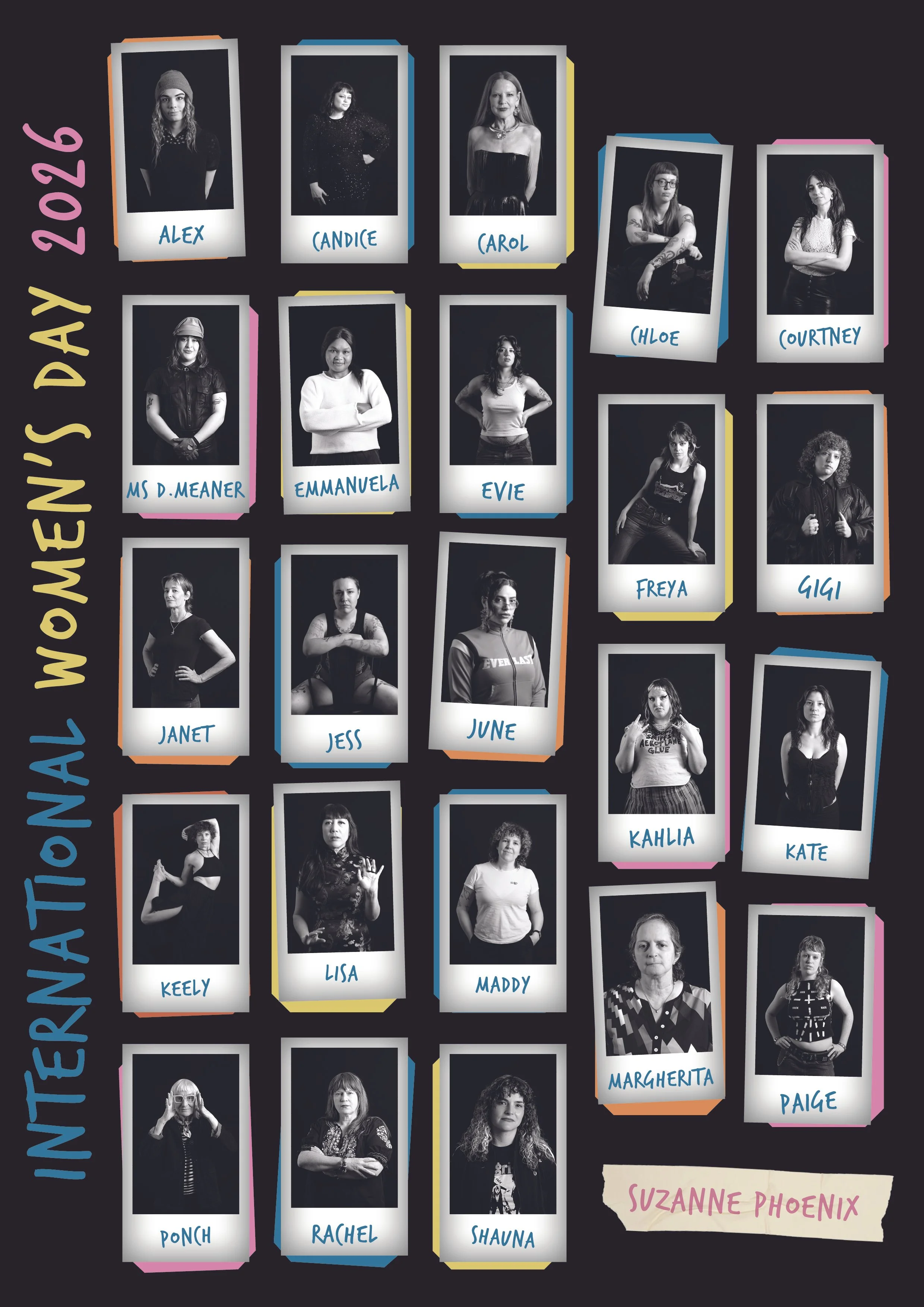
International Women’s Day Exhibition poster